
Precious Vs Semi-Precious Gemstones
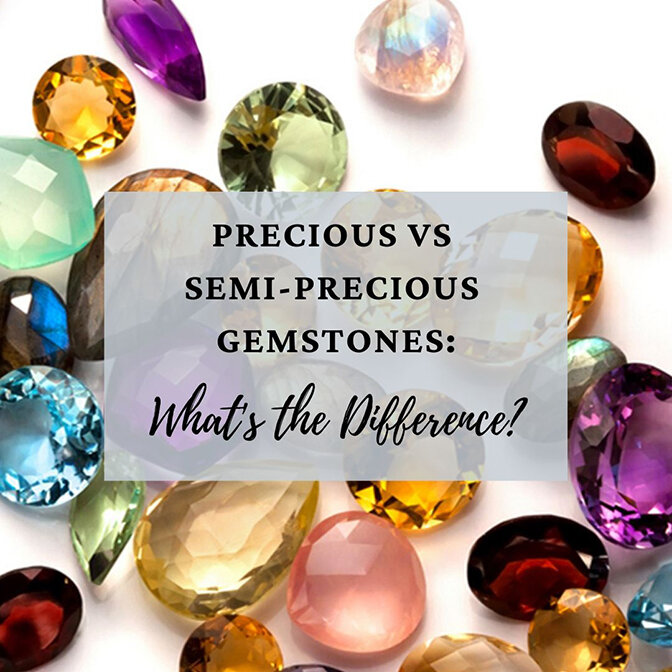
I love colored gems of all types, but blues and greens and the shades in between are definitely my favorite, well, except for reds (garnets), I really love them, too. I especially love gemstone rings – it puts those stones in the perfect place for me to gaze upon them all day… When looking at or reading about gemstones I often hear/see the terms precious and semi-precious tossed around. If you’ve looked at gemstone jewelry, you may have heard these terms, too. You may be curious about, “Which stones are precious and which are not, and why?” Or, “Why is this semi-precious stone more expensive than that precious stone?” Although I’m not a gemologist, I CAN give you some answers to these questions!
The fact is, there is no real difference between precious and semi-precious gemstones! The distinction between gemstones that are “precious” and those that are “semi-precious” is actually arbitrary and has no scientific backing. For example, emerald (which is among the precious gems) is a variety of beryl, just like aquamarine (a semi-precious stone). In fact, red beryl (also categorized as semi-precious) is more rare and often more expensive than emerald!
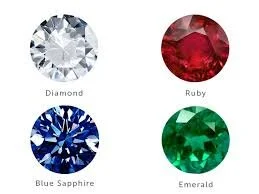
Right now, four gemstones are popularly classified as “precious” - emerald, ruby, sapphire, and diamond. Sellers of precious stones began using the term to play up the stones’ value, beauty, and rarity.
Early on, amethyst was also included on the list of precious stones, however, when large deposits of the stone were found in South America, prices dropped and it was no longer considered “rare.” The term “semi-precious” began to be used to indicate its downgraded status.
Not too long after, huge South African diamond mines were discovered (1870) and diamonds went from just a few pounds being mined each year to being dug out of the ground literally by the ton! So, why weren’t diamonds demoted to the rank of semi-precious? The answer to this question centers on the merger of the biggest diamond mines by the De Beers brothers, whose family still controls worldwide diamond production and supply to this day. Although quality diamonds are actually not scarce at all, De Beers controls how much supply comes on the market and that keeps prices high.

They also mounted a concerted advertising campaign that spanned decades to create an association of diamonds with love, courtship and marriage. The diamond engagement ring, once unknown in most parts of the world (including Europe), is now considered an essential part of the ritual of marriage. It is hard to avoid the conclusion that diamond's special position as a precious stone is largely due to monopoly economics and social engineering.
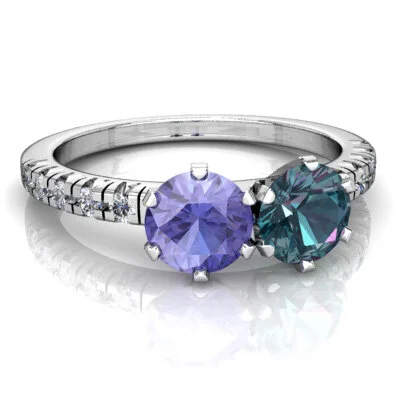
Today, numerous stones that remain in the semi-precious category can be priced much higher than an average precious stone and many are more rare. The most desired natural pearls and spinels garner huge prices – and alexandrites, tanzanites, and certain types of garnet are harder to find, harder to mine, and produced in much lower qualities than the precious gemstones.
It is fair to say that the distinction between precious and semi-precious gemstones has become meaningless. The US Federal Trade Commission periodically considers banning the use of the terms to reduce consumer confusion. The American Gem Trade Association (AGTA) has included the directive in their Code of Ethics that members should avoid the use of the term semi-precious in describing gemstones.
There are currently about 200 unique gemstones in the world! I advise you not to get caught up on whether a stone is labeled precious or semi-precious. If you find a stone eye-catching for its color(s), shape, distinctive inclusions, the beautiful jewelry in which it resides, and/or the experiences it makes you think of, then it IS special, valuable, and precious.
Ask any questions or let me know about your favorite gemstones in the comments!
Stay well!