
Argentium Silver, Sterling Silver, and Fine Silver
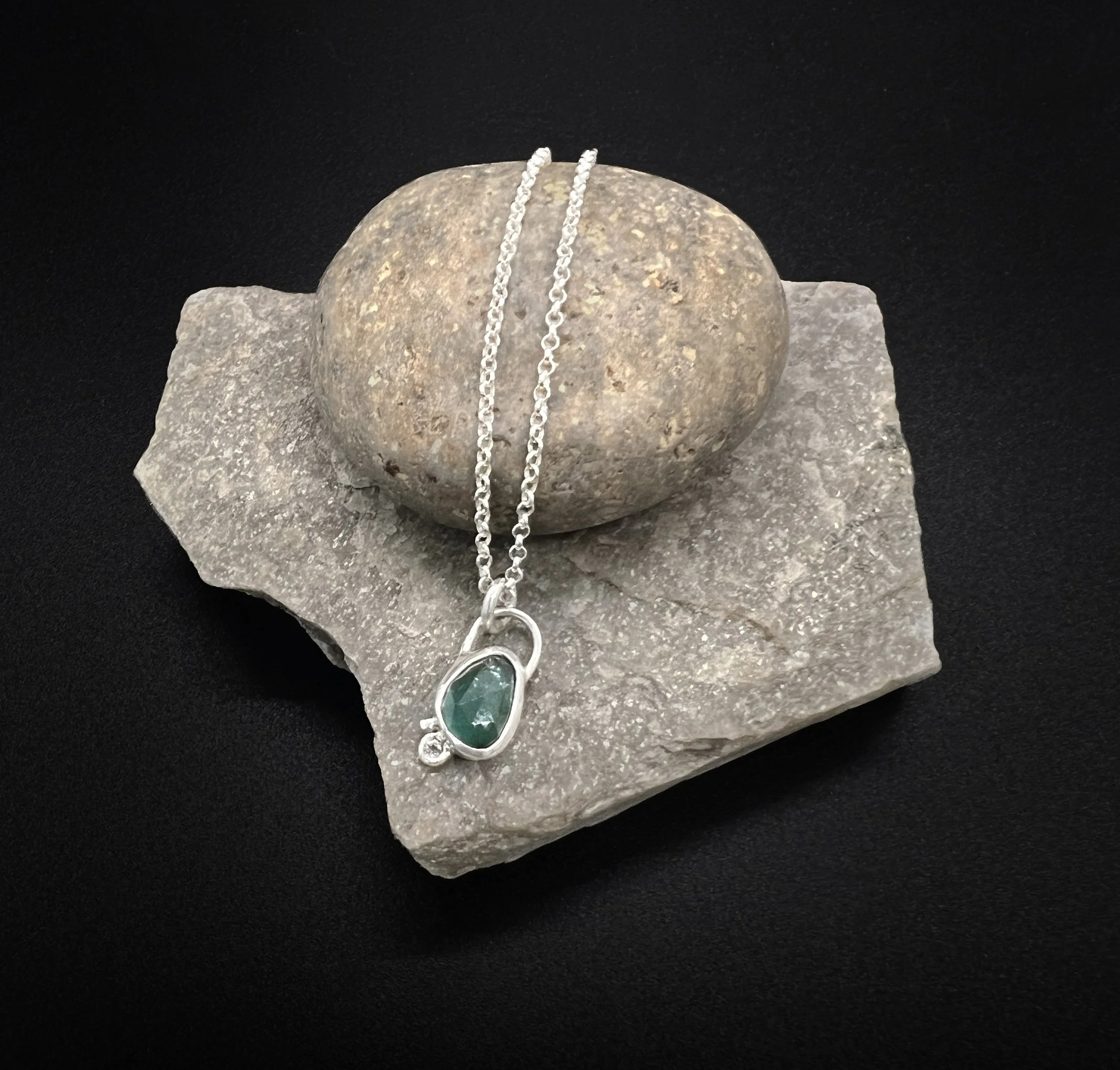
This grandidierite and topaz pendant is made with Argentium silver (back, bail, and jump rings), Fine silver (bezel around the grandidierite stone), and Sterling silver (tube holding the small topaz and the commercial chain).
I use a lot of Argentium Silver in my work. I like the way it works and feels and I think it looks just a bit brighter than Sterling. I’ve had people ask me, “What is Argentium?” and “What makes it different from Sterling Silver?” or “Why don’t you just use Fine Silver so you don’t have to worry as much about tarnish?” Below I’ll give you a brief description of the three metals. They all make beautiful, lasting jewelry (except silver plated, blech!) so the silver that a jeweler chooses is usually based on their personal preference for what they like to work with - I actually use all three depending on what I’m making!
Fine .999 Silver
Fine silver is the closest metal to the pure element silver. The mark for it is .999 which indicates 99.9% purity. The 0.1% remainder consists of trace elements of insignificant quantity. This type of silver is quite soft and is used often in bezels for stones where malleability is a plus. It is less common in other parts of jewelry because items may not wear well over time.
Sterling .925 Silver
Sterling is the jewelry quality standard in the United States and most world markets. It is an alloy of 92.5% silver, with the remaining 7.5% usually being copper. The copper in the alloy increase hardness so the material will be more durable. Alloy additions also create the color and luster that is so prized by consumers. Sterling silver is the silver color we are most familiar with and the most common type of silver in US jewelry stores. It is bright and shiny but it will tarnish, and Sterling jewelry will be scratched or dented if it is banged around.
Argentium Silver (Non-Tarnish Alloys)
Non-tarnish alloys are fairly new to the market. Argentium is one brand but there are others available that are similar. These alloys are a minimum of 92.5% silver though some will be higher in silver content (Argentium contains 93.5% silver). The remainder consists of copper and the addition of the element germanium. The germanium makes the alloy harder and resistant to tarnish. Non-tarnish alloys can still tarnish under extreme conditions and after extended periods of time, but they will generally require less maintenance than sterling. It is difficult to distinguish from sterling once on the market because jewelers often use the .925 quality stamp on it, indicating the minimum amount of silver allowed, which is the same as Sterling.
Let me know if you have any questions about metals - I’m not an expert, but I may be able to help you find the information you need!